Unlock the Editor’s Digest for free
Roula Khalaf, Editor of the FT, selects her favourite stories in this weekly newsletter.
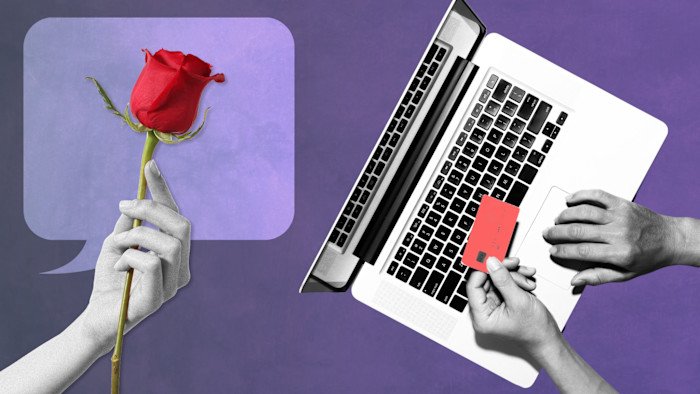
How could you be stupid enough to fall for a romance scammer?
It’s a question readers ask whenever I write about this topic — but ahead of Valentine’s Day, I’ve spoken to survivors of this devastating fraud to understand what really happens.
Let’s get something straight. “Romance scams” might sound fluffy, but this is organised crime happening on an industrial and international scale.
Victims might believe they’re exchanging messages with a potential soulmate, but for weeks on end, the 24/7 love bombing is likely to be generated by a highly coordinated operation of shift workers housed in huge scam compounds in south-east Asia and west Africa.
AI has turbocharged this crime, improving not just the quality of messages, but also aiding the creation of credible backstories and social media accounts that scammers set up. Increasingly, deepfake videos and voice-altering software are being used to disguise their deception, leaping over any language barriers and convincing victims they’re the real deal.
With an estimated 11mn people in the UK looking for love on dating apps, what’s the one quality that makes you particularly attractive to a fraudster?
Vulnerability. If you’ve been through a bad break-up, are widowed, a cancer survivor or — sickeningly — someone who has experienced domestic abuse, the scammers will love you even more. Why? Because you will be easier to manipulate psychologically.
Using what’s called trauma bonding, they forge a connection by claiming a shared experience, pretending they’ve also lost a partner, for instance. They want victims to feel like nobody else understands them as they do. Conversations will quickly be moved off official dating sites and on to social media or messaging apps, and there’s always an excuse why they cannot meet in person (a common claim is having a job that involves working in another country). Victims can overlook this as weeks of messages and calls engineer trust and dependency. And it’s only then that an apparently innocuous request for money will be made.
Fraudsters can squeeze a high return from their “investment”, coercing victims into sending ever larger sums of money multiple times. Nationwide building society, which sees a sharp increase in romance scam reports in the month after Valentine’s Day, says women over the age of 55 typically lose the most. Criminals know they’re more likely to have access to significant savings, pensions, divorce settlements or property wealth.
Average losses are £4,700, but it is not uncommon for men and women to lose tens of thousands of pounds. Jim Winters, head of economic crime at Nationwide, notes the rise in “blended romance investment fraud” where scammers groom victims into believing they can make a fortune backing apocryphal crypto schemes.
Becky Holmes, whose brilliant book Keanu Reeves is Not In Love With You charts her deliberate baiting of romance scammers posing as celebrities on social media, says criminals continue to extract money even when their cover is blown. Sextortion is the main way. She knows of victims in their 60s who have paid huge ransoms to stop compromising images from being sent to their adult children.
Her forthcoming book, The Future of Fraud, also examines the rise of scam recovery fraud. Knowing that victims have lost a fortune, the same criminals pose as “scam recovery agents”, claiming they can retrieve funds — for a price. “Confused and desperate, victims think, ‘Maybe I can actually get this money back without the trauma of actually telling anyone,’ but they just end up having even more stolen,” Holmes says.
She has interviewed more than 60 scam victims that she’s come into contact with on social media. She wouldn’t describe any of them as stupid, though every single one had something going on in their lives at the time that was affecting them emotionally. Afterwards, many were so deeply ashamed they had never told their families, let alone the police; nor had they ever asked their bank to refund their losses — even though changes to the fraud reimbursement rules make success more likely.
Holmes rightly questions why there is less public sympathy for victims of romance scams than, say, for someone who has been mugged. Although the financial losses can be catastrophic, most say that’s not even the worst part of this crime — it’s the emotional trauma of trusting someone and being deceived. Victims often feel so wretched and stupid they don’t want anyone to know, which is why Holmes firmly believes romance fraud is the most under-reported crime in the UK. She has one word to describe the official statistics, and it’s not complimentary.
In truth, staying silent is the only “stupid” thing. By not reporting these crimes, not exposing the scammers’ ruthless MO and not shouting loudly enough about the devastating consequences of this targeted, manipulative abuse, the only ones who gain are the criminals. But fraud victims who do go to the police say it makes little difference.
UK banks may be more firmly on the hook for covering losses, but they have precious little ability to prevent fraud that relies on fake social media profiles, cheap AI tools, deepfake software and the anonymity of messaging apps.
We can wait in hope for international law enforcement agencies and foreign governments to mount a crackdown on this hateful crime. But the heartbreak will only continue unless greater political and regulatory pressure forces Big Tech companies to take fraud detection and prevention on their platforms far more seriously. If anyone should be ashamed about romance scams, it’s them.
Claer Barrett is the FT’s consumer editor; claer.barrett@ft.com Instagram @ClaerB