Unlock the White House Watch newsletter for free
Your guide to what Trump’s second term means for Washington, business and the world
A US banking regulator refused to share details about the application for a US bank licence by the Trump family’s crypto venture, which received a $500mn investment from an Abu Dhabi royal.
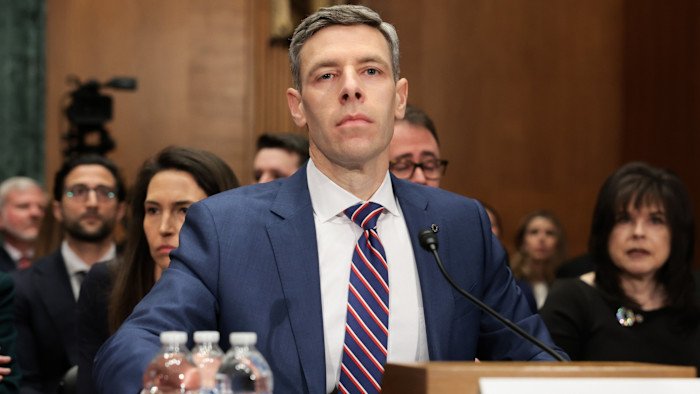
The head of the Office of the Comptroller of the Currency, which grants federal banking licences, rejected calls from members of the Senate banking committee on Thursday to share details of the application by World Liberty Financial and denied President Donald Trump had applied any pressure to secure approval.
Democratic members of the committee called on the OCC to say whether WLF had disclosed its sale of a 49 per cent stake to Sheikh Tahnoon bin Zayed al-Nahyan, the United Arab Emirates’ national security adviser who also oversees a sprawling business empire.
The deal has intensified concerns about whether the UAE has been granted favourable treatment in return for its investment in a company owned by Trump’s family, including approval for Abu Dhabi to gain access to US AI chips and whether these could be passed on to China.
WLF has denied the $500mn deal had anything to do with an agreement to grant the UAE access to the chips.
Trump is described on WLF’s website as the company’s co-founder emeritus. The president declared personal income of $57.3mn from WLF in his most recent financial disclosure, covering the 2024 calendar year.
Elizabeth Warren, one of the leaders of the Democrats’ liberal wing, asked OCC head Jonathan Gould about WLF’s application, claiming it was beset by conflicts of interest given the Trump family’s ownership of the company.
WLF applied for a banking licence in early January through an entity called World Liberty Trust Company. Details of its deal with the UAE, which was agreed days before the president’s inauguration, were reported earlier this month.
Warren asked Gould if WLF disclosed in its application that Sheikh Tahnoon had become a “principal shareholder in the proposed bank”. Gould replied: “I am not going to discuss the specifics of any application.”
Warren added that if the licence was granted, he would be a party to “the most disgraceful corruption scandal in US history”.
Gould said: “We will process that [WLF] application as we process all applications and I would note that the only political pressure I have felt from any part of the US government is from you.”
Democratic senator Chris Van Hollen also questioned Gould about a $2bn investment by Abu Dhabi investment vehicle MGX to use WLF’s stablecoin to buy a stake in crypto exchange Binance last year. “Does any of that background play and factor into your decisions?” he asked.
Andrew Kim, another Democratic committee member, asked Gould: “Is there a formal policy at the OCC requiring enhanced scrutiny when a foreign state official is involved that could very well undermine US national security?” The OCC head said he would get back to Kim.
WLF said: “Democrats are playing politics and, with baseless lies, smearing a private American company undergoing a rigorous regulatory process. WLTC complied with every element of the application process including providing all requested disclosures.”
The company is one of five with pending applications for a national bank charter lodged with the OCC. Crypto companies Coinbase and Laser Digital have also applied.
A bank charter would allow WLF to issue and hold inventory of its USD1 stablecoin, a crypto token intended to match the value of the US dollar (a third party currently provides those services). WLF would not provide loans or accept deposits.
The bank’s proposed senior executives include Zach Witkoff, a WLF co-founder and son of Steve Witkoff, the billionaire real estate mogul now serving as the US special envoy to the Middle East, and Jeffrey Weiner, chief executive of Integrity Automotive Holdings, a car dealership group that operates in New York, New Jersey and Connecticut.
Earlier this week, WLF said USD1 was “completely safe” after an attack on some of its founders’ social media profiles briefly broke the token’s peg to the dollar.